
Introduction
Kia K4 is Kia’s bold new entry into the compact sedan segment. With sleek styling, modern tech, and a renewed focus on performance and comfort, the K4 aims to replace the Forte/K3 line and elevate what buyers expect in this class. In this post, I’ll walk you through everything about Kia K4—its history, where it’s built, who made it, what it offers, pricing, market launch, strengths and challenges, and my take at the end.
Table of Contents
The Genesis: Why Kia K4?
The name “K4” marks a shift in Kia’s naming strategy. Previously, the compact sedan market had the Forte (or K3/Cerato in some regions). In 2024, Kia announced that the K4 would succeed the Forte/K3/Cerato line, with the K3 designation moving to a subcompact segment.
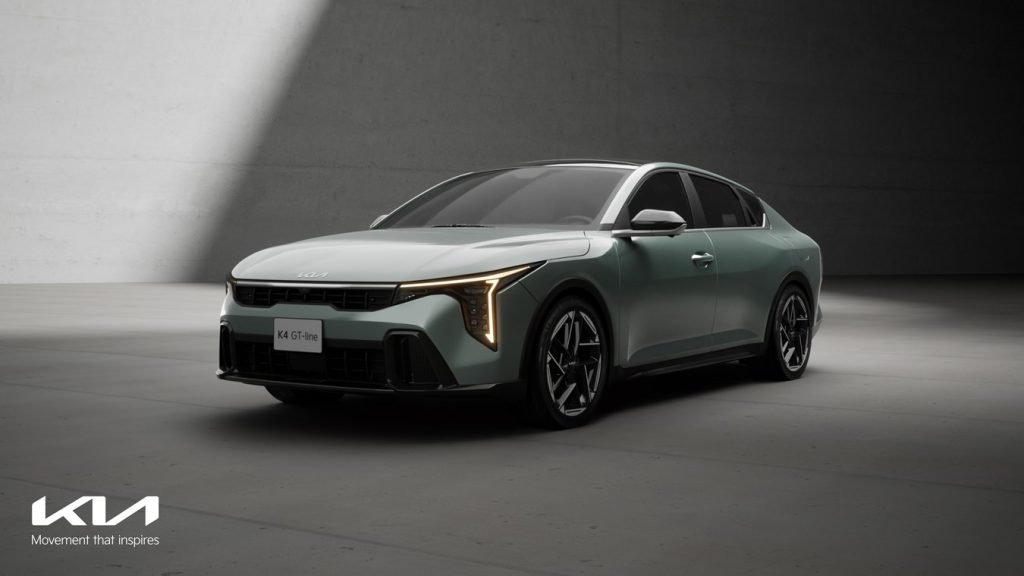
Kia officially revealed the K4 in March 2024, with a global debut on 27 March 2024 at the New York International Auto Show. The K4 is designed to be a more modern, stylish, and tech-forward compact sedan (and hatchback in some markets) that bridges the gap between Kia’s lower-tier models and its larger sedans.
Where Is Kia K4 Built & Why?
K4 is manufactured in Kia’s facilities with global reach. For North America, it is built in Monterrey, Nuevo León, Mexico (KMMX) The global Kia website presents the K4 as a next-generation model, with all the modern connectivity and safety features expected of a global compact sedan.
This Mexico assembly helps Kia serve the U.S. and Latin American markets efficiently, controlling logistics and cost. At the same time, Kia’s global branding and shared platforms allow K4 to benefit from economies of scale.
Who Designed / Developed Kia K4?
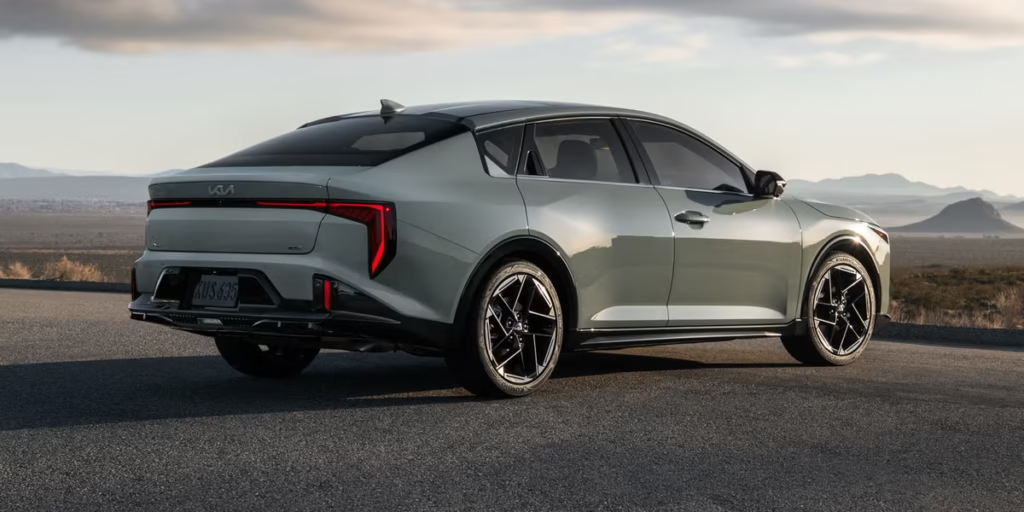
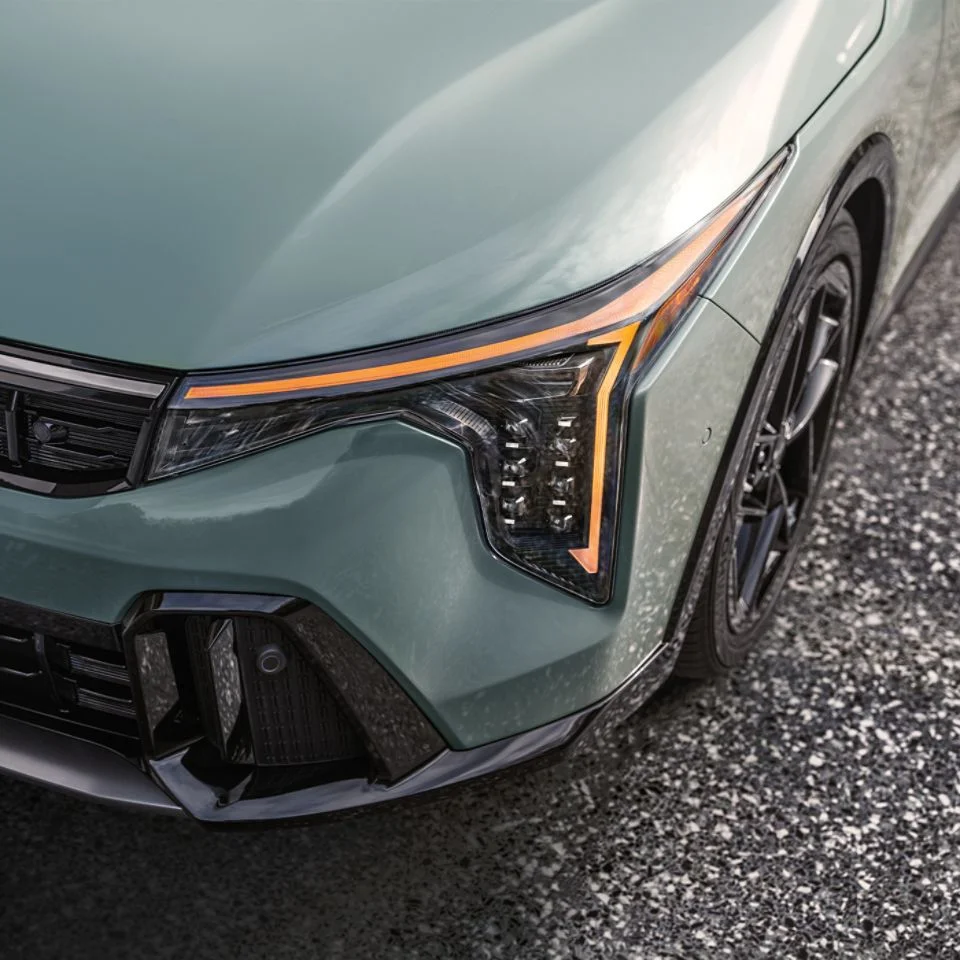
Kia’s global design and engineering teams collaborated on the K4. The design carries Kia’s “Opposites United” philosophy—sharp edges, bold surfaces, and contrast in form. The styling is aggressive yet balanced: vertical LED lighting, hidden rear door handles, a thick D-pillar in the sedan variant, and a fastback silhouette.
Under the skin, the K4 shares architectures with Hyundai-Kia’s global compact platforms, leveraging established powertrains and engineering systems to maintain cost and reliability.
Trim Levels, Powertrains & Specs
Body Styles & Dimensions
K4 is available as:
- 4-door sedan with a fastback-like rear roofline.
- 5-door hatchback / shooting-brake style in some markets.
It measures about 4,710 mm in length (for sedan variant) with a width of 1,850 mm and height ~1,420 mm. The wheelbase is 2,720 mm.
Engine Options & Transmissions
K4 offers several engines depending on market and trim:
- 2.0 L MPI (naturally aspirated) – a base engine in many trims for balanced performance and economy.
- 1.6 L T-GDi turbo engine – found in the sporty “GT-Line Turbo” model, producing ~190 hp (~195 lb-ft torque) in the U.S. version.
Transmission options include IVT (intelligent variable transmission) for the naturally aspirated version and an 8-speed automatic for the turbo model.
K4 emphasizes driving refinement—Kia claims best-in-class NVH (noise, vibration, harshness) performance to make cabin quiet and comfortable.
Features & Technology
One of the strong suits of Kia K4 is how much tech it packs for its class.
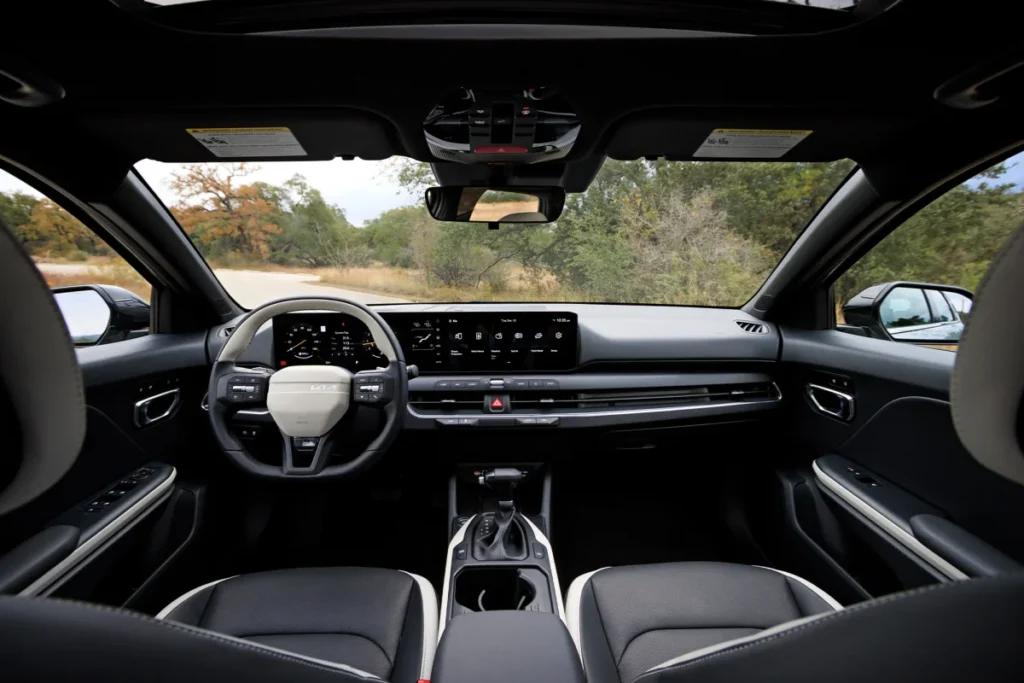
- Dual large screens (infotainment + instrument cluster) combining into nearly 30 inches of digital display across trims.
- Wireless Apple CarPlay & Android Auto are standard across all K4 models.
- Kia’s AI assistant (generative AI) is integrated to help with vehicle commands, navigation, and daily tasks.
- OTA (Over-The-Air) updates allow continuous software improvements without needing to visit a service center.
- Advanced safety: Forward Collision-Avoidance Assist (FCA) with Evasive Steering Assist, Highway Driving Assist (HDA) 2.0, Blind-Spot View Monitor (BVM), Surround View Monitor (SVM).
- Comfort features: ambient lighting, premium insulation, quality materials, hidden rear door handles for cleaner lines.
In trims like GT-Line, sport accents such as gloss-black trim, unique wheels, spoilers, and paddles add visual and functional flair.
Pricing & Market Launch
K4’s pricing varies depending on region and trim.
In the U.S., the 2025 (as K4 model year) base trim (LX) started around $21,990 MSRP. Higher trims (EX, GT-Line, GT-Line Turbo) go higher.
In Mexico, K4 launched on 1 August 2024 with trims L, LX, EX, and GT-Line. The hatchback variant arrived ~7 August 2025.
In Australia, K4 was launched 16 January 2025 with trims S, Sport, Sport+, GT Line, powered by either 2.0 MPi or 1.6 T-GDi.
In other global markets, the vehicle is being rolled out gradually, with specifications adapting to local emission and regulation standards.
Strengths & Challenges
Strengths
- Modern styling and design that stands out in a crowded compact sedan segment.
- Rich tech features—in many ways, premium car features in a compact form.
- Strong safety suite and good NVH control, giving a smoother, more refined drive.
- Multiple powertrain choices, allowing balance between efficiency and performance.
- Global strategy with localized production, meaning competitive pricing and presence.
Challenges
- Competition from SUVs / crossovers that dominate many markets.
- Turbo vs naturally aspirated tradeoff: some buyers may find the base engine less exciting.
- Adoption in markets where compact sedans are declining—Kia is betting on value and style to keep K4 relevant.
- Currencies, taxes, and import duties can bloat prices outside North America.
Comparison & Positioning
K4 slots below Kia’s midsize offerings (like K5) but above entry-level models, making it a bridge between affordable and aspirational. It competes against cars like the Toyota Corolla, Honda Civic, Hyundai Elantra—but with edge in features and value.
If you’ve read about Nissan Sentra 2026, you’ll appreciate how Kia is trying to push the compact sedan segment forward again.
My Take & User Perspective
From what I’ve seen and read, Kia K4 is a strong step forward. It doesn’t reinvent everything, but it packs in enough substance that many buyers will take notice. The design is fresh, the tech is compelling, and the performance (especially in turbo trims) should satisfy those who drive a lot.
Personally, I’d go for the GT-Line Turbo—it gives that balance of daily usability and spirited driving. The fact that Kia includes features like wireless CarPlay, AI assistant, and OTA updates tells me they’re serious about long-term usability.
One caution: depending on your country, taxes or import costs might push the price quite high. So it’s best to check how Kia will price K4 locally where you are.
Links to Check
- Want to see how Kia presents the K4 globally? Visit their official site:
👉 Kia K4 Global Site Kia - For context on other models or comparisons:
👉 Nissan Sentra 2026 blog (internal link)