
When I first heard about Himalayan 452 vs KTM Adventure 390, I knew it was going to be a close fight. Both bikes aim for that sweet spot between road touring and light off-road capability. In this review I’ll walk you through specs, real-world behavior, pros and cons, and help you decide which one fits your style (or whether neither does). I’m writing this from the perspective of someone who loves to ride, test, compare—and yes, I make mistakes too. So take this as a human take, not a robot’s perfect copy.
Table of Contents
Introduction & Context
The Royal Enfield Himalayan has long been a favorite among adventure riders in India and nearby markets. But with its older 411 cc variant, people often debated whether it had enough punch. Enter the Himalayan 452: a major upgrade with more power, better dynamics, modern features. On the other hand, the KTM Adventure 390 (or in its newer form, ~399 cc versions) has always been a contender in the lightweight ADV segment with strong performance pedigree. So comparing Himalayan 452 vs KTM Adventure 390 is very relevant for anyone choosing a mid-capacity adventure bike today.
Throughout this article I’ll refer to official spec sources, experiences (mine and others’), and also pitfalls where real use reveals what spec sheets can’t. I’ll also insert an outbound link to KTM’s official page and an internal link to a related blog you might like:
- For more detail’s visit KTM official site:
- Internal link: see my blog comparing SUVs here: Mahindra Thar vs Maruti Jimny
Let’s dive in.
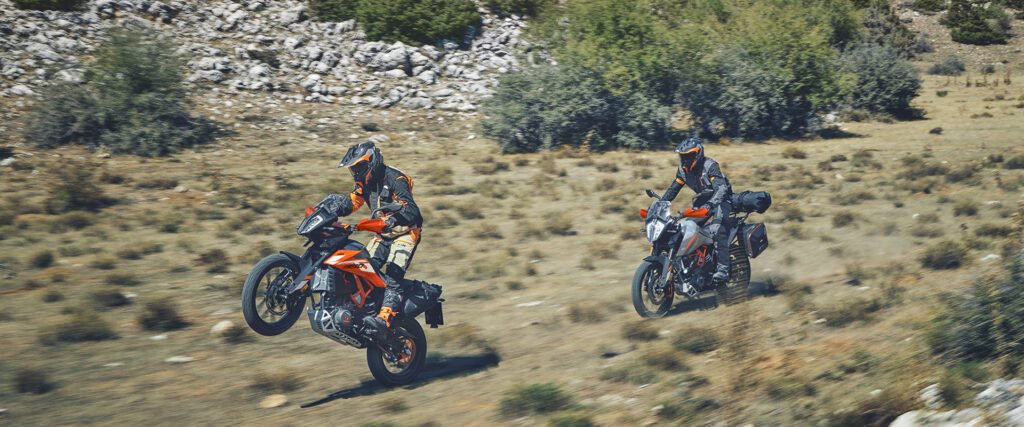
Spec Comparison: What the Sheets Say
These numbers give us a base. Real ride will add context.
| Parameter | Himalayan 452 | KTM Adventure 390 / 399 cc version |
|---|---|---|
| Engine & Displacement | 452 cc, liquid-cooled, DOHC, 4 valves | ~398.63 cc (new model) |
| Power & Torque | ~40 hp @ 8000 rpm, ~40 Nm @ 5500 rpm | 46 PS @ 8500 rpm, 39 Nm @ 6500 rpm |
| Transmission | 6-speed manual | 6-speed, with optional quickshifter+ in newer models |
| Suspension | Front: 43 mm USD, 200 mm travel; Rear: monoshock, ~200 mm travel | Front: WP APEX 43 mm USD, 170 mm travel; Rear: WP APEX monoshock, 177 mm travel (for 2024 spec) |
| Seat Height | 825 mm (adjustable) | 855 mm standard, lower option 830 mm |
| Ground Clearance | ~230 mm | 200 mm |
| Weight | ~196 kg | 159 kg (without fuel) for 2024 model |
| Fuel Tank | 17 litres | 14.5 litres |
| Features / Electronics | Ride-by-wire, 4″ circular display, adjustable seat, dual channel ABS, tubeless spoked wheels | TFT display, multiple ride modes, cornering ABS, optional quickshifter+ |
From these numbers, Himalayan 452 is heavier and has more travel in suspension, higher ground clearance, bigger tank. KTM has the advantage in power-to-weight, sharper handling potential, and modern electronics aids.
But specs don’t tell the whole story. Let me share how these bikes feel—and where each shines or struggles.
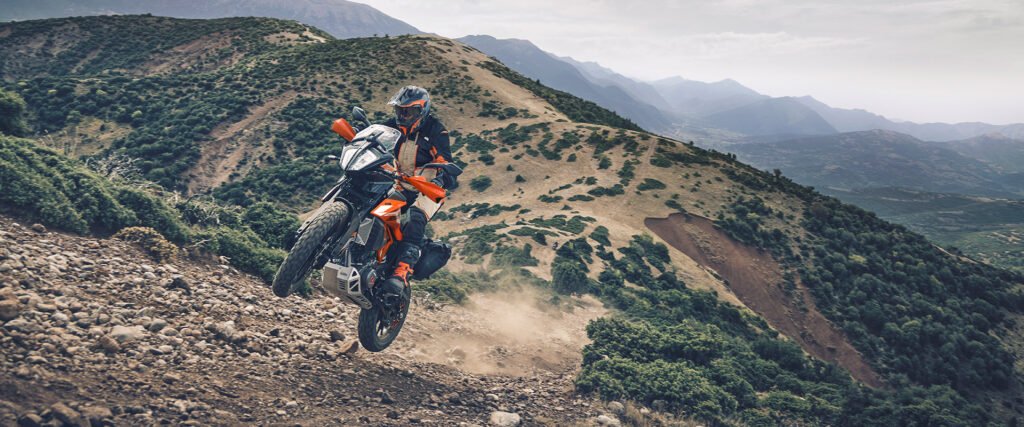
Ride Feel, Handling & Real-World Use
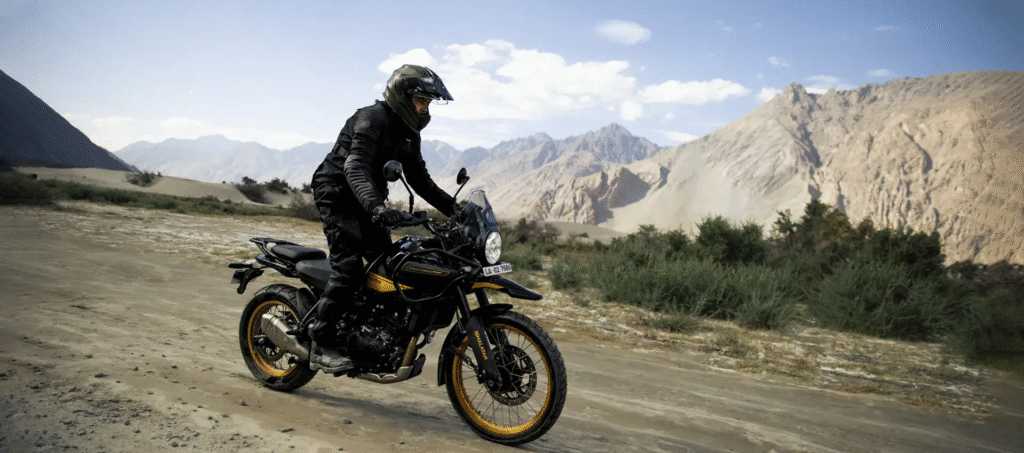
Himalayan 452 — The Bulky Trail Buddy
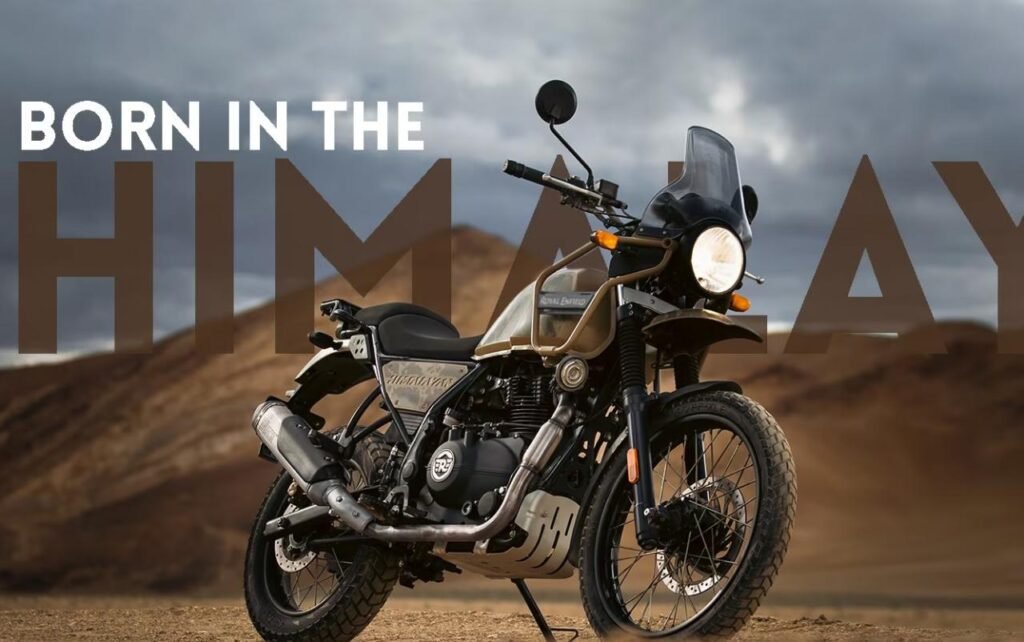
From the moment you swing a leg over the Himalayan 452, you feel solidity. It’s built like a rugged machine meant for abuse. The adjustable seat height (805 mm to 845 mm) helps slightly for shorter riders, though at 825 mm standard it’s still a tall machine.
On roads, it is comfortable. The riding posture is upright, the handlebar is wide, and vibrations are controlled at moderate speeds. In city traffic its weight is noticeable, but manageable once you adapt.
Off-road, the long travel suspension (200 mm) helps absorb bigger hits, and the geometry is forgiving. But because it’s heavy (196 kg), it demands effort on technical tracks. The high ground clearance (230 mm) lets you negotiate obstacles with confidence.
On highways, the bulk and wind resistance start to show beyond 110–120 km/h. It stays stable, but the lack of power beyond its torque band becomes more evident. Fuel efficiency is moderate; expect ~25–30 km/l depending on riding style (some users report around 30 kmpl) .
Pros in real use: great for long treks with pillion and luggage, solid suspension comfort over bad roads, trustworthy build. Cons: heavy in technical off-road, less sharp in twisty roads, the power curve isn’t as aggressive as KTM’s.
KTM Adventure 390 — The Agile Performer
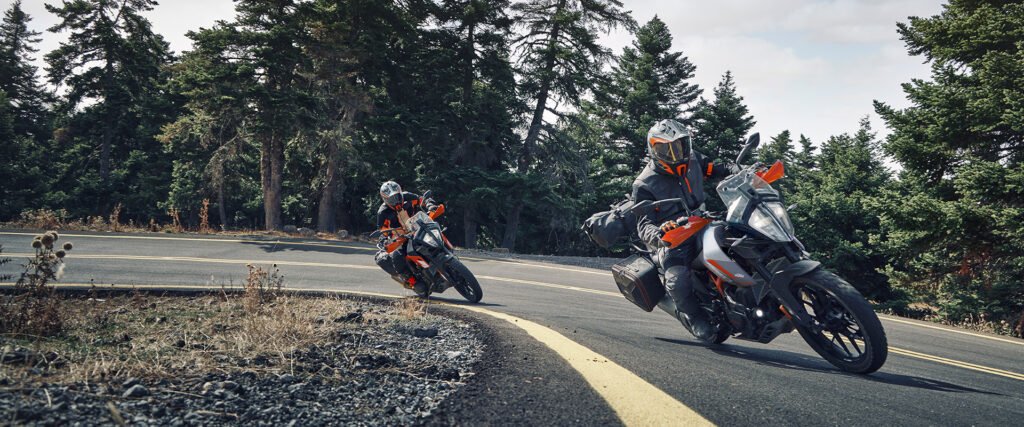
The KTM 390 (especially in its newer 398 cc variant) feels alive. Because of lighter weight (~159 kg dry for 2024 spec) you feel eager in direction changes. In twisties it dances. Acceleration feels sharper, especially mid-range. Electronics, ride modes, and ABS aid make it more confidence inspiring when pushing hard.
In city traffic, it’s more nimble than the Himalayan. Zipping through gaps is easier, and the lighter mass helps. That said, the seat is tall (855 mm) so foot reach can be tricky for shorter riders.
Off-road, the KTM can perform very well in moderate terrain—if you know what you’re doing. But its suspension travel is lower (170 / 177 mm) , and ground clearance is less (200 mm) , so in deep ruts or big obstacles the Himalayan has an edge. Also, being lighter, the KTM can get unsettled when you hit a big bump if not careful.
On highways, it holds speed well and you’ll feel more alive past 120 km/h. It’s more at home in aggressive scenarios. Fuel range is lower because tank is smaller (14.5 L) , so you’ll refill more often on long trips.
Strengths in real use: nimble handling, better acceleration, advanced electronics aids. Weaknesses: less forgiving on heavy off-road, slightly less comfort over harsh bumps, top-end stability is good but Himalayan might feel steadier when fully loaded.
Feature & Equipment Differences
Beyond basic specs, features matter deeply in everyday use.
- Electronics & Ride Aids: KTM gets multiple ride modes, cornering ABS, optional quickshifter+, and more aggressive mapping. Himalayan 452 is more basic but functional—ride-by-wire, ABS, but fewer modes.
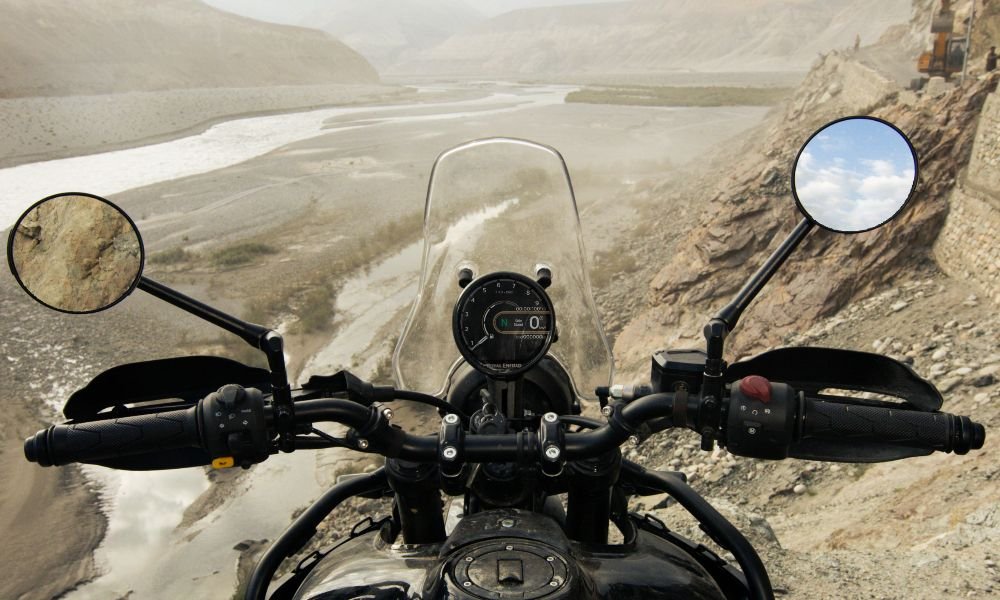
- Instrumentation & Display: Himalayan 452 gets a 4″ circular display with navigation support. KTM has a full TFT display, smartphone connectivity, etc.
- Wheels & Tyres: Both use spoked wheels with tubeless setup (depending on region). Himalayan leans toward robustness.
- Brakes: Himalayan: 320 mm front disc, 270 mm rear disc (improvement over old model) . KTM: 320 mm front, 230 mm rear (for many models) . KTM’s lighter weight helps braking performance.
- Comfort & Ergonomics: Himalayan’s seat is broader, more cushy; KTM’s is slimmer and sportier. Pillion comfort: Himalayan may have a slight edge.
- Service, Parts, Trust: Royal Enfield has deep service network in India; parts for Himalayan likely easier to get broadly. KTM also has solid network, but premium parts costs could be higher.
- Fuel Range & Touring Potential: Himalayan with 17 L tank gives longer range between stops. KTM with 14.5 L will force more frequent fueling.
Where Each One Wins & Loses
Here’s a breakdown of where Himalayan 452 vs KTM Adventure 390 (399 cc) differ in advantages and disadvantages—based on riding conditions and likely usage.
Where Himalayan 452 is better:
- Rough terrain, deep ruts, big obstacles — the extra ground clearance and suspension travel help.
- Long touring with luggage and pillion — stability under load is better.
- Simpler riding style, fewer electronics to worry about (less to break).
- Better availability of parts/after-sales in many Indian and roadside spots.
Where KTM Adventure 390 is better:
- Twisties, highway overtaking — better power-to-weight, sharper response.
- City use, quick maneuvers, occasional bursts — lighter mass gives advantage.
- Rider who wants modern electronics, riding modes, responsiveness.
- For shorter, more aggressive rides rather than slow, heavy trekking.
Where they both struggle:
- Very extreme off-road (rock crawling, big drops) — neither is a hardcore enduro.
- Very tall riders may find the seat height limiting or tiring over time, particularly on Himalayan (though adjustable helps).
- For riders who want “all-in-one” extreme performance, both will have compromises.
My Verdict & Recommendation
If I were to choose between these two, here’s how I’d decide (based on my riding style):
- If I were doing frequent mixed terrain, long tours, carrying gear and sometimes pillion, I’d lean Himalayan 452. Its ruggedness and travel make it more durable and forgiving in long runs.
- If I were more performance oriented, love fast rides, twisties, want sharper responses and modern electronics, I’d lean KTM Adventure 390 (new 399 cc variant).
But real answer: choose based on your roads, riding style, your injury risk, your budget for servicing and parts access.
Tips for Buyers & What to Watch Out For
- Test ride both. Your height, weight, feel matters more than specs.
- Check parts cost and service availability in your city / region.
- If you’re mostly road with occasional dirt, KTM might feel more fun.
- If you’re heavy or carry load / pillion often, Himalayan might feel more stable.
- In long trips, plan fuel stops more carefully for KTM due to smaller tank.
- Watch for warranty, accessory support, and software updates (for KTM especially).
Final Words
The debate Himalayan 452 vs KTM Adventure 390 isn’t about one “superior” bike; it’s about what suits you. Himalayan gives you peace, stability, and longevity under load. KTM gives you excitement, sharper behavior, and rich electronics. Both have tradeoffs.