
Introduction
KTM Duke 990 is a bold evolution in the KTM Duke lineup. From the very first sentence, I want you to feel this is about the Duke 990 — not some generic bike. Over the years I’ve ridden many Dukes, and seeing the 990 emerge has been a mix of excitement and scrutiny. In this blog I’ll take you through its design, tech, performance, comfort, pros and cons, and how it stacks up in real life. I’ll also add links (internal & external) so readers can dig deeper.
Table of Contents
Introduction & What Makes It Special
When KTM announced Duke 990, expectations were high. The goal was to push beyond the 890 yet stay within a “middleweight” frame. The result is a machine that tries to blend thrill and usability. What I’ve felt riding it, and what the specs confirm, is that KTM has aimed at making a “sweet spot” bike — one that’s aggressive when you want it, but manageable in everyday conditions. Many reviews praise its balance of power, handling, and comfort.
It’s not perfect — no bike is — but KTM Duke 990 does many things right. In the next sections, I’ll break down every major aspect: engine, chassis, design, electronics, comfort, riding impressions, and trade-offs.
Engine & Performance
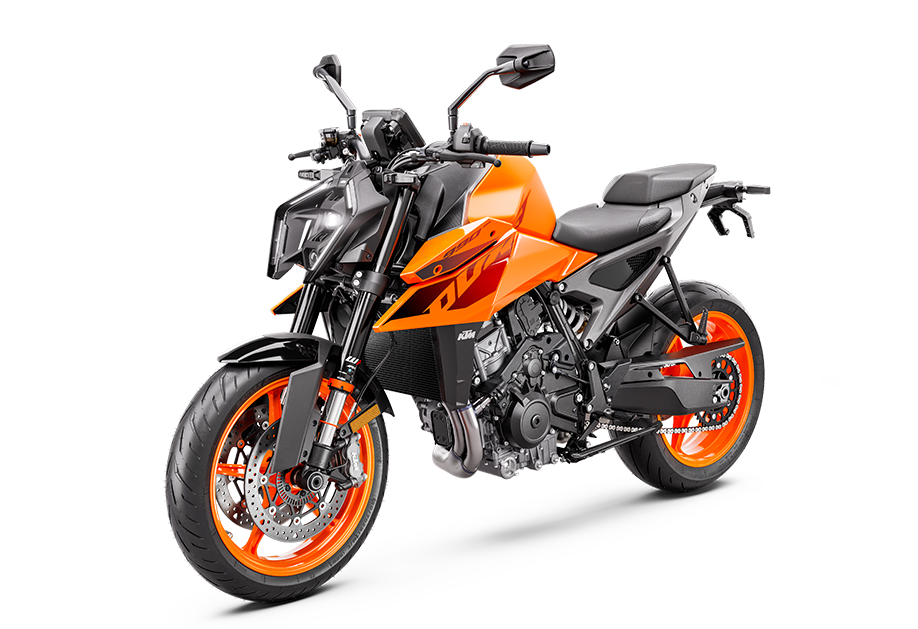
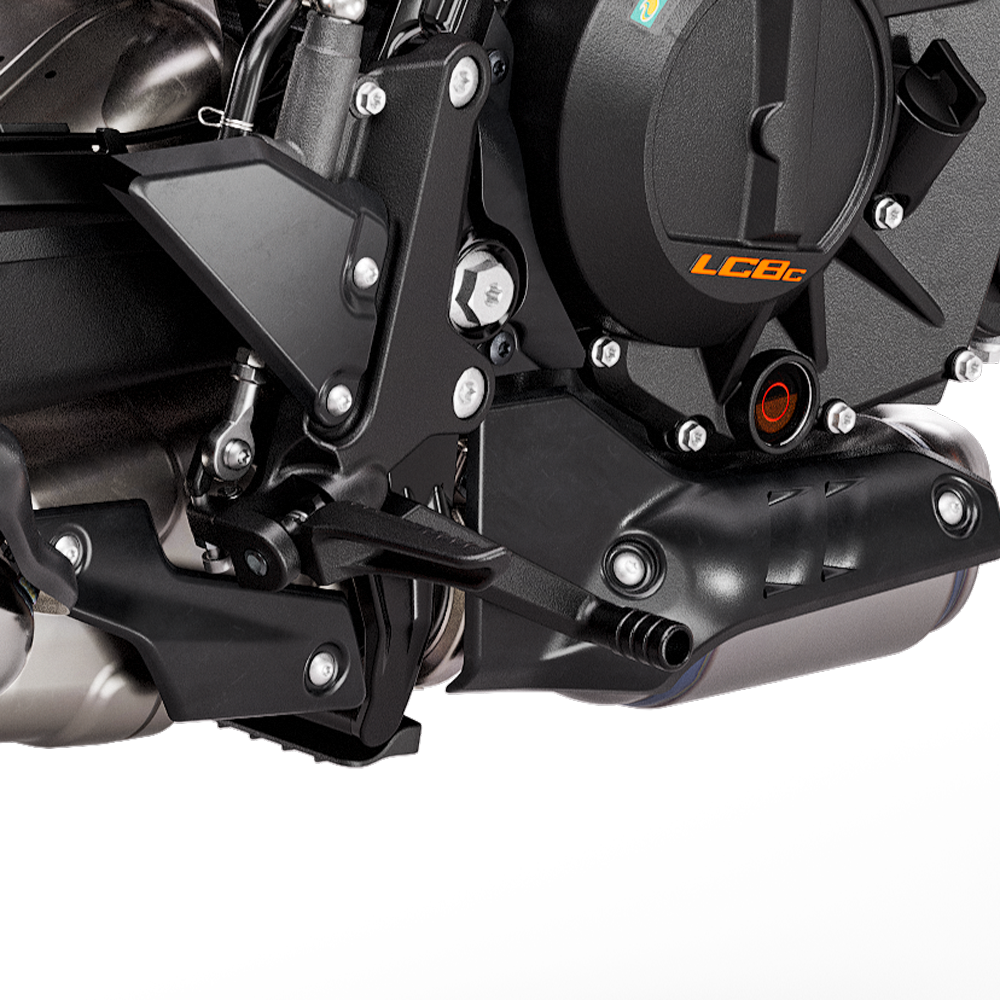
The heart of KTM Duke 990 is its 947 cc parallel-twin LC8c engine. KTM claims 123 horsepower (at ~9,500 rpm) and 103 Nm of torque (at ~6,750 rpm). Compared to the 890, it offers more punch, especially in the mid and upper rev ranges, though KTM has also tried to keep responsiveness across lower revs.
In real riding, that means when you twist the throttle from 3,000–4,000 rpm onwards, there’s a satisfying surge. It feels strong but still controllable. Up top, past 9,500 rpm, the power curve tapers a bit, but you’re rarely left wanting. Some testers felt that the bottom end is very usable on real roads.
The clutch is a wet, multi-plate slip & assist type, which makes downshifts smoother. Transmission is a 6-speed. Fuel injection, liquid cooling, and modern engine internals all help it meet modern standards.
In short: the engine is one of the highlights of Duke 990 — powerful, responsive, and usable in daily riding as well as spirited pushing.
Chassis, Suspension & Handling
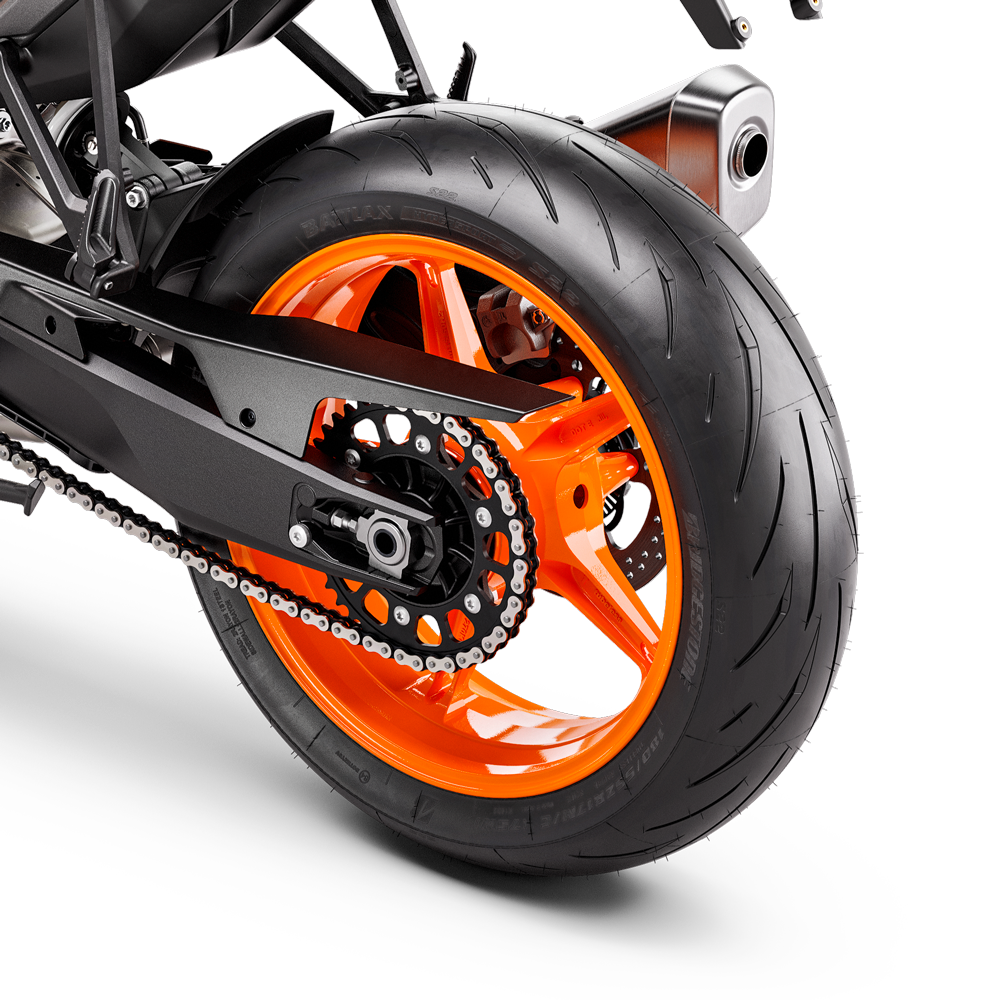
KTM has revamped the frame for Duke 990. It uses a new tubular steel structure, combined with an aluminum diecast subframe. The swingarm is gravity die-cast aluminum, giving reduced weight and better flex characteristics. The idea is to balance stiffness (for precise handling) with a bit of compliance so the ride doesn’t feel too harsh.
Up front, you get a WP APEX 43 mm inverted (USD) fork. It’s adjustable for compression and rebound (5 click settings). Rear suspension is a WP APEX monoshock, adjustable in preload and rebound. Travel is about 140 mm front, 150 mm rear.
Brakes are strong. Up front there are twin 300 mm floating discs with 4-piston radial calipers; rear has a 240 mm disc. It comes with ABS and even Supermoto ABS feature.
On real roads, this setup feels sharp but not unforgiving. In twisty roads, the bike leans in eagerly, and the frame stays composed. Compared to previous Dukes (790 / 890), Duke 990 feels more settled and planted, especially at higher speeds or on imperfect surfaces.
One trade-off: on broken roads or sharp bumps, the suspension can feel firm. But overall, it’s well balanced.
Design, Ergonomics & Comfort
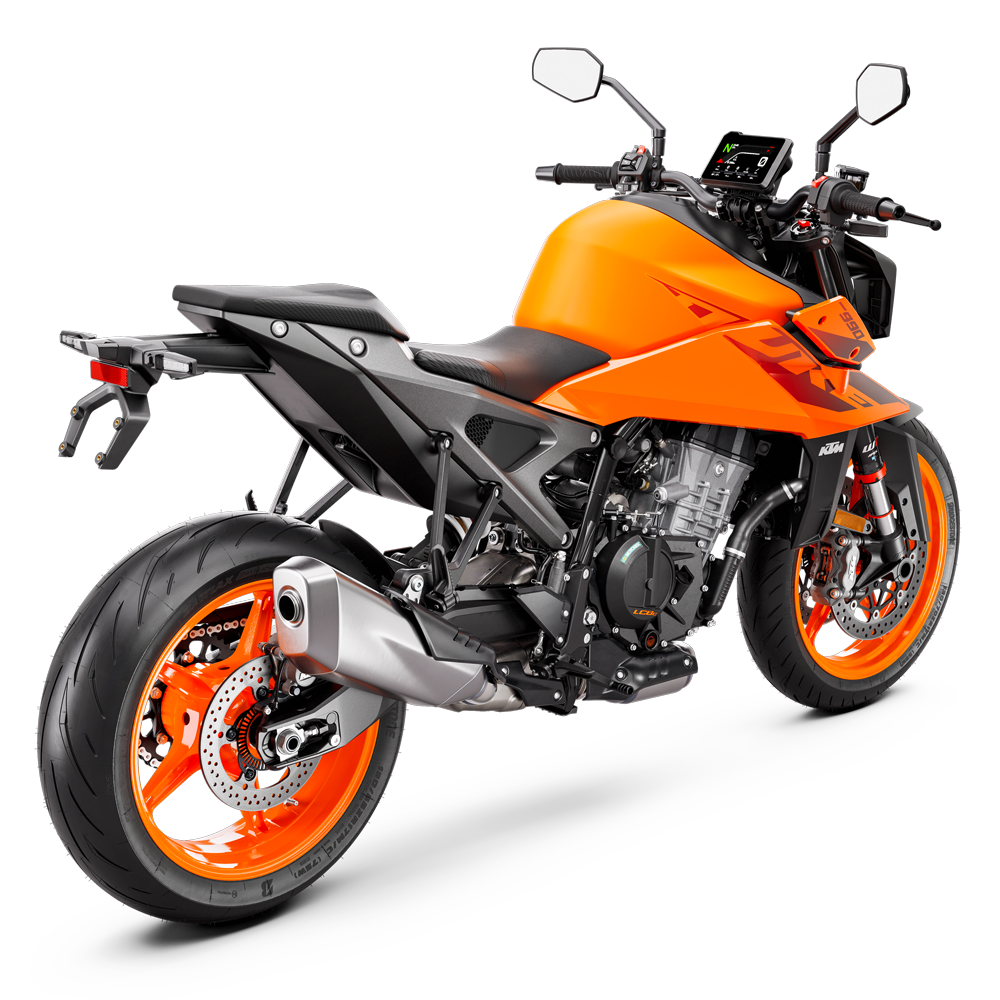
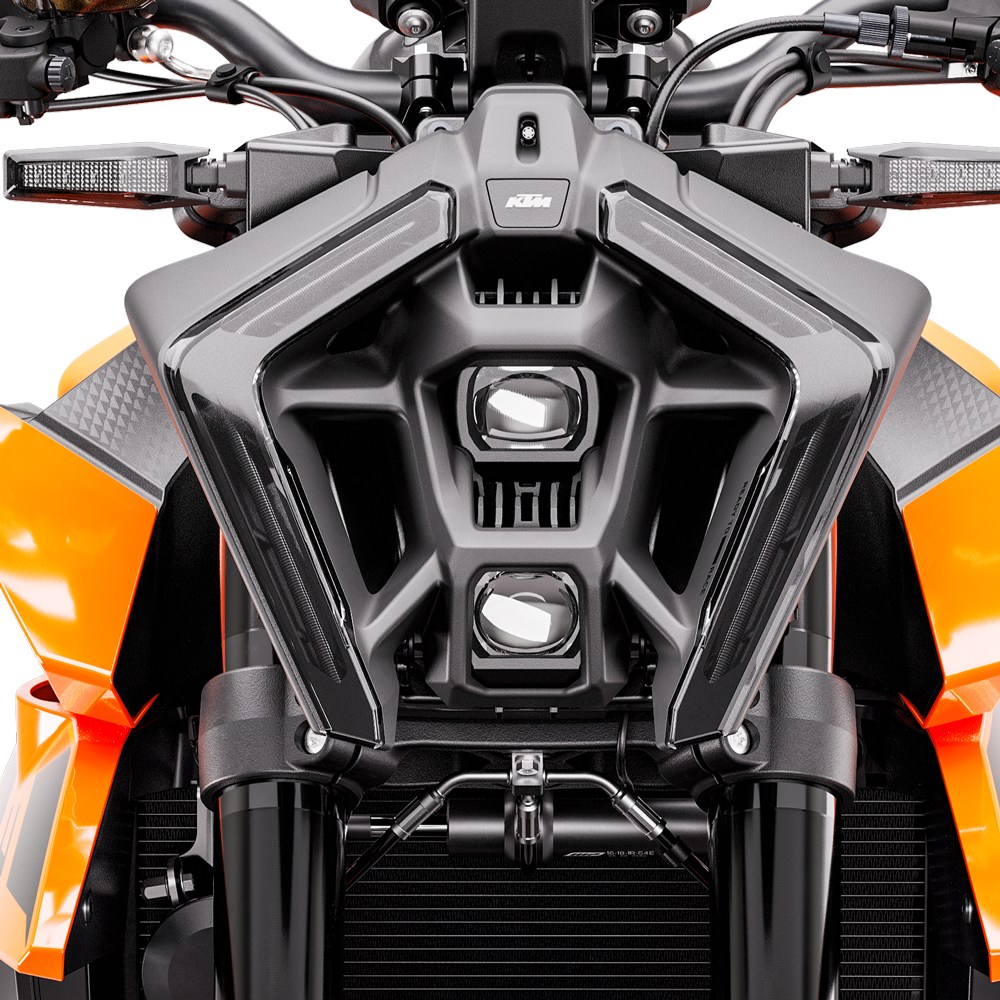
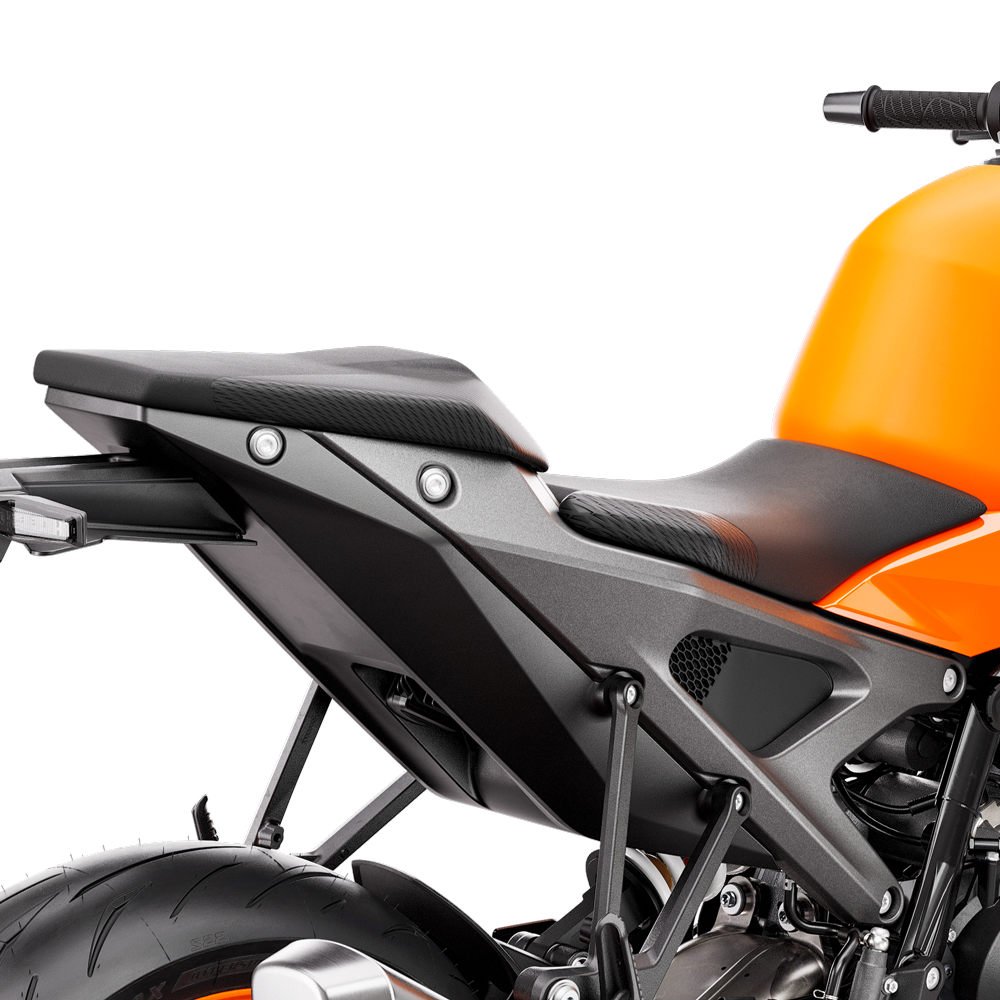
Visually, Duke 990 leans toward aggressive naked styling. It borrows cues from the Super Duke family. Many find the headlight design controversial at first glance, but over time it grows on you. The subframe integrates airboxes and air intakes cleverly under the seat.
Seat height is 825 mm (about 32.4 in), with a slight forward tilt of 2° for a sporty posture. That means for average riders, getting both feet flat on the ground may need care, but it’s not extreme. The seat surface offers a balance of grip and movement, so during spirited riding you don’t feel stuck.
Footpegs are aluminum and help with grip, and vibration damping is considered in design. The pillion’s knee angle is made a bit more comfortable, though the bike is optimized for the rider first.
On longer rides, fatigue can set in — the sport-naked posture isn’t ultra relaxed. But for daily usage and weekend rides, comfort is decent. The ride is firm, but not punishing. I’ve felt it on rough patches; it holds up.
As for wind protection, it’s minimal (as expected for naked style). At high speed, wind blast is there. For city or twisty roads it’s okay. If you ride highways often, you may want a small flyscreen or aftermarket wind deflector.
Electronics & Features
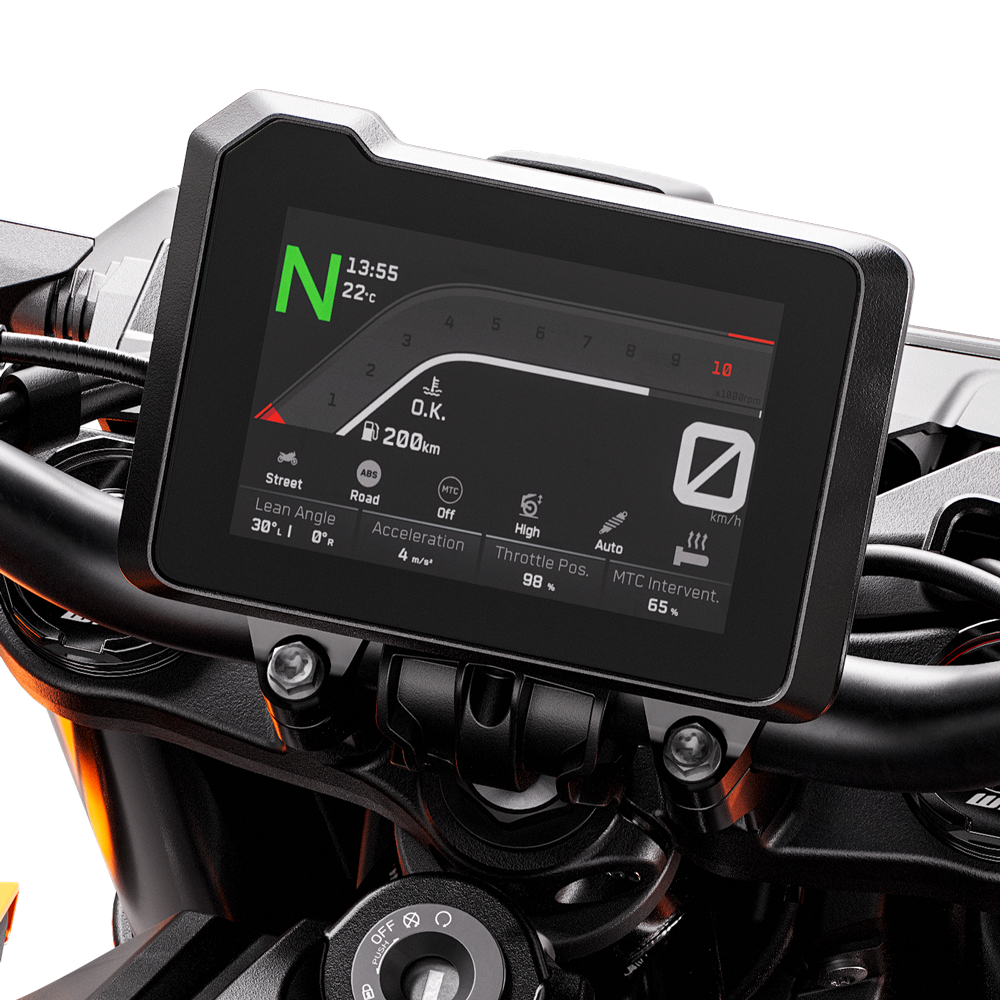
KTM has put solid electronics in Duke 990. There are multiple ride modes (Street, Sport, Rain) by default. You can add an optional Track mode, which unlocks more aggressive throttle mapping, rear wheel slip control (10 levels), anti-wheelie control (5 levels), and launch control.
Traction control is standard. ABS is standard (with Supermoto ABS option). The system is modern and works reliably, adding confidence especially in wet or variable surfaces.
I like how the electronics do not get in your way in daily riding, yet you can dial in aggression when you want it. They’re not over the top. One small missing feature: cruise control isn’t standard. If you do long highway trips, absence of cruise is felt.
Specifications at a Glance
- Displacement: 947 cc
- Power: 123 hp
- Torque: ~103 Nm
- Seat height: 825 mm
- Weight (without fuel): ~179 kg
- Suspension travel: front ~140 mm, rear ~150 mm
- Brakes: Twin 300 mm fronts with 4-piston calipers, 240 mm rear disc
- Fuel tank capacity: ~14.8 liters
- Range (claimed for Duke R version): ~300 km (based on fuel economy ~4.7 L/100 km)
Riding Experience & Real-World Feel
From my experience and reviews I’ve read, riding the Duke 990 gives you a strong sense of control and excitement. On twisty mountain roads or undulating routes, it feels connected. You sense the road surface through suspension and feedback, yet the frame and electronics buffer the extremes.
City riding is manageable, though the engine’s character means you want to stay in higher revs to keep it alive. Low rpm crawling is fine, but you’ll often be in 3,000–5,000 rpm range for responsiveness.
At higher speeds, the bike feels more stable than earlier Dukes (790, 890). Many reviewers have noted it’s more planted. The limit is high, and when pushed, the bike behaves predictably. The brakes are reassuring; you can scrub speed confidently.
Vibration is minimal for this class. KTM seems to have managed harmonics well. You’ll feel some, especially through pegs or handlebar at high rpm, but nothing extreme.
For daily use and weekend blasts, I think this is one of the most versatile Dukes so far. It has enough performance to excite, yet daily usability isn’t compromised.
Pros & Cons
No machine is perfect. Here’s what I believe are the strengths and trade-offs:
Pros:
- Powerful yet controllable engine
- Excellent midrange torque and usability
- Sharp, confident handling + planted feel
- Solid electronics suite (ride modes, ABS, traction, optional Track mode)
- Good balance between sporty and usable
- Strong brakes and chassis feedback
- Distinctive styling and aggressive presence
Cons / Things to Watch:
- Seat height may be tall for shorter riders
- Wind protection is minimal (naked style)
- Suspension is firm, somewhat harsh on very bad roads
- No cruise control (for highway riders)
- Slight drop in power curve at top end
- For long touring, comfort may be a concern
Comparison with Predecessors (790 / 890)
I’ve ridden 790 and 890 Dukes. Those were sharp, fun, but sometimes felt a bit edgy or less stable at high speeds. Duke 990 seems to take that rawness and tame it a little — still fun, but more confidence. Many reviews agree: 990 marks a maturation of the Duke concept. The added torque, refined frame, better weight distribution all contribute. Also, the electronic suite is more robust now.
Tips & Recommendations
- If you’re buying, try to test ride on rough roads to feel the suspension.
- Use the standard ride modes first — only switch to Track mode if you know what you’re doing.
- Consider adding a small windscreen if you ride highways often.
- Regular maintenance of suspension and brakes will help maintain sharpness.
- If you’re not tall, check whether you can comfortably flat-foot; lower seaters or adjustable seats may help.
Further Reading & Links
For more technical details or to see the official presentation, you can visit KTM’s official site for the 990 DUKE (external link).
As a related article, you might find this internal link useful: Aston Martin DB12 details at UpdateSnap.
Final Thoughts
The KTM Duke 990 is a standout in the modern “super naked / middleweight naked” class. It balances aggression and control, offering a package that’s not just “fast” but also usable. The engine character, chassis design, and electronics all work together well. If you’re looking for a powerful naked bike that also handles everyday life, Duke 990 is a strong contender.
Of course, it’s not perfect — compromise is always there in style vs comfort, or rawness vs refinement. But overall, this is a bike that excites, connects, and delivers. That’s been my take from riding experience and from analyzing the specs and reviews